STRETCH
Built to stretch
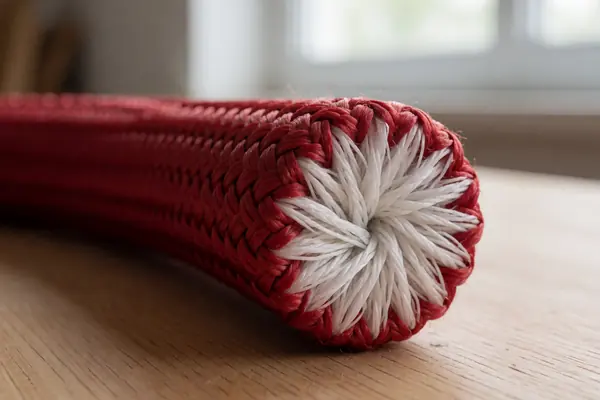
A dynamic rope is somewhat elastic, so it absorbs a fall's energy slowly and lowers the peak force. A static rope stretches only slightly.
Try a fall ocsportware
HOW THE GEAR IS TESTED
A climbing rope is a shock absorber.
A dynamic rope stretches as it stops a fall, so the climber slows gradually instead of stopping dead. European and UIAA standards set how much force, stretch and wear a rope may show in the lab, and the label tells you the results.
12 kN the single-rope limit
Try a fallTHE SHORT ANSWER
Three ideas explain most of a rope label.
All come from the published standards.
STRETCH
A dynamic rope is somewhat elastic, so it absorbs a fall's energy slowly and lowers the peak force. A static rope stretches only slightly.
Try a fallCORE AND SHEATH
The core and the woven sheath can slide against each other. Over 2 metres of rope, EN 892 allows under 40 mm of sheath slippage; the UIAA asks for under 20 mm.
See the numbersROPE TYPES
Single ropes are used alone. Half and twin ropes work as a pair and are tested differently, so their figures are not directly comparable with a single rope's.
Read a label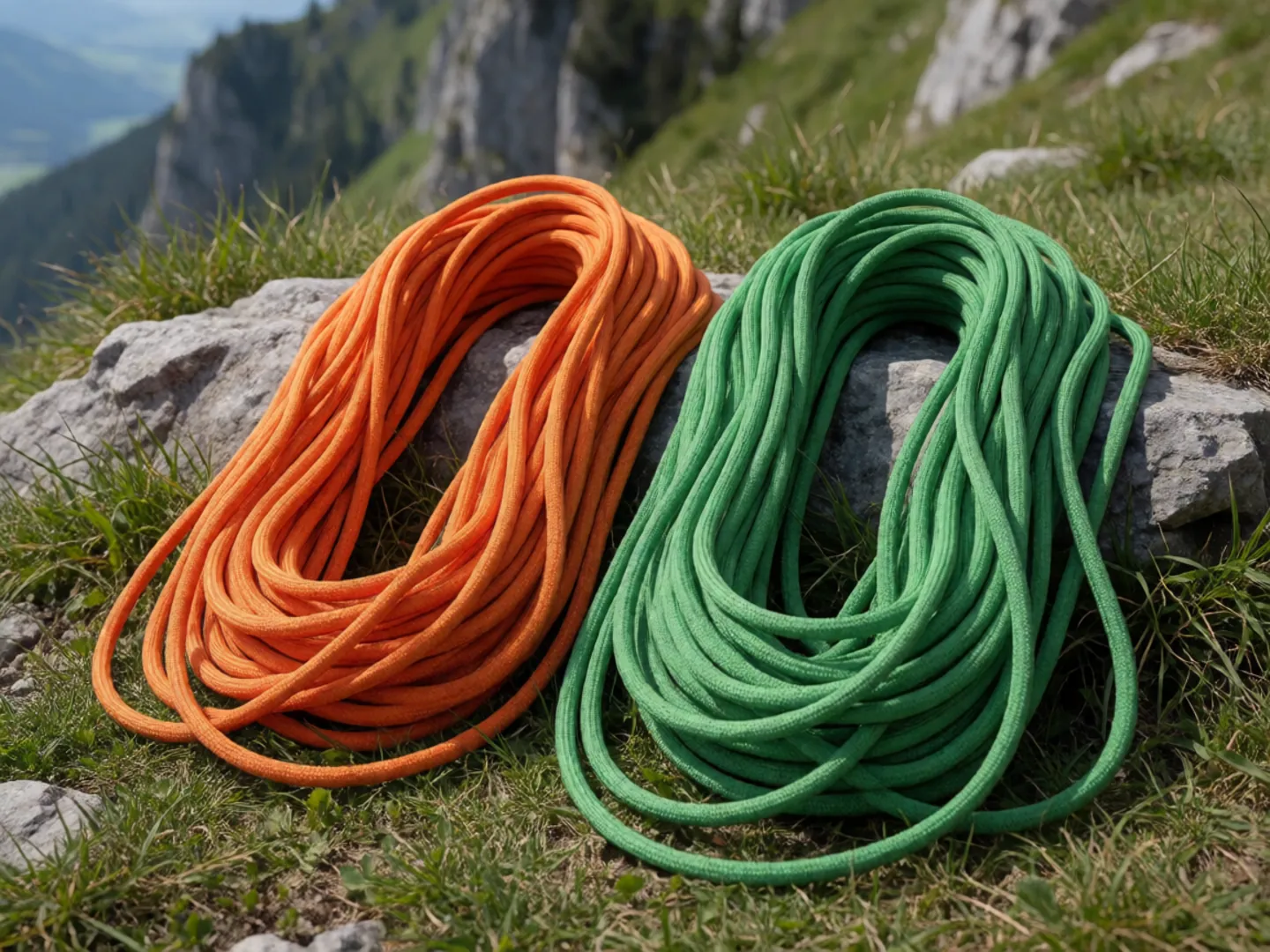
FOUR NUMBERS ON THE LABEL
Every certified rope publishes the same test results. Here is what each one measures, as the British Mountaineering Council explains them.
The force passed to the climber when a fall is stopped. A lower figure means a softer catch and less load on the anchors; it rises as a rope ages and takes falls.
Stretch under an 80 kg load: no more than 8% for single ropes and 10% for double ropes, so the rope does not behave like a bungee.
Stretch during the first standard test fall, which must not exceed 40%.
How supple the rope is: an overhand knot under a 10 kg load must have an inside diameter under 1.1 times the rope's diameter.
TWO NUMBERS WORTH KNOWING
One limit on force,
one on how many falls a rope must hold.
12 kN
Maximum peak force, single rope
In the standard drop (fall factor 1.78) with an 80 kg mass, a single rope may transmit no more than 12 kN. A half rope strand, tested with 55 kg, must stay below 8 kN on the first drop.
IMPACT FORCE · EN 892 VIA BMC
5 drops
Successive test drops a rope must hold
To conform, a rope must withstand 5 successive drops with the impact-test mass. Many makers also test to destruction and quote the number of drops to failure, but test rigs vary.
NUMBER OF FALLS · EN 892 VIA BMC
The UIAA began creating safety standards in 1960 with the testing of ropes, and now has standards for over 25 types of climbing and mountaineering equipment.
A QUICK FALL CHECK
The fall factor is the height fallen divided by the length of rope there to absorb it. Pick a situation to see its fall factor; the bar shows how harsh that fall is for the rope.
Based on the fall factor explanation in Wikipedia and the BMC's description of the standard test drop. General information about how ropes are tested, not climbing instruction.
INSIDE THE ROPE
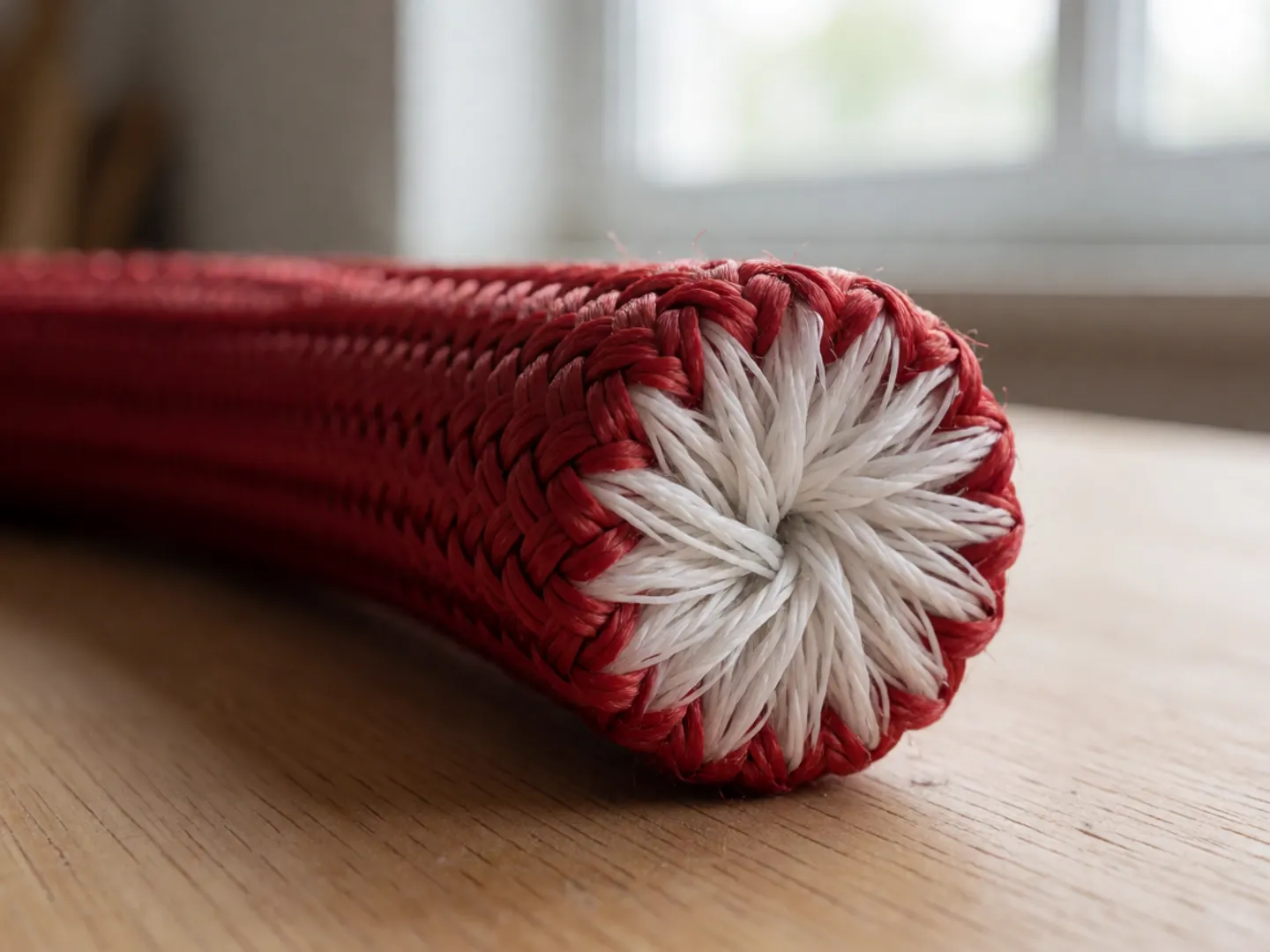
Most dynamic ropes today are kernmantle: a load-bearing core (kern) inside a woven protective sheath (mantel). Since 1945, nylon has replaced natural fibres in climbing rope because it is stronger and more durable.
The sheath is woven from groups of filaments, each from a bobbin. The BMC says more bobbins give better dynamic handling and fewer give better abrasion resistance. Some ropes are dry treated to absorb less water; a UIAA Water Repellent rope must gain less than 5% in weight in the UIAA water test.
Questions
A dynamic rope is designed to stretch and absorb the energy of a fall. A static rope has only slight elongation under load, and the UIAA publishes separate standards for each.
It is the force passed to the climber, and along the rope to the anchors and belayer, when a fall is stopped. EN 892 allows at most 12 kN for a single rope in the standard drop.
They are tested with different masses: 80 kg for a single rope and 55 kg for one strand of a half rope. The BMC says the figures are not directly comparable.
The International Climbing and Mountaineering Federation. It began making safety standards in 1960 with ropes and works with the European standards body CEN; some UIAA tests are stricter than the European ones.
The BMC says ropes are made to the European standard EN 892 and tested by an independent laboratory; testing to the UIAA standard as well is optional and not required by law.
Updated
ABOUT THIS NAME
ocsportware.com is part of the DoodleSale portfolio. It isn't in an auction right now, but you can ask about leasing it.